
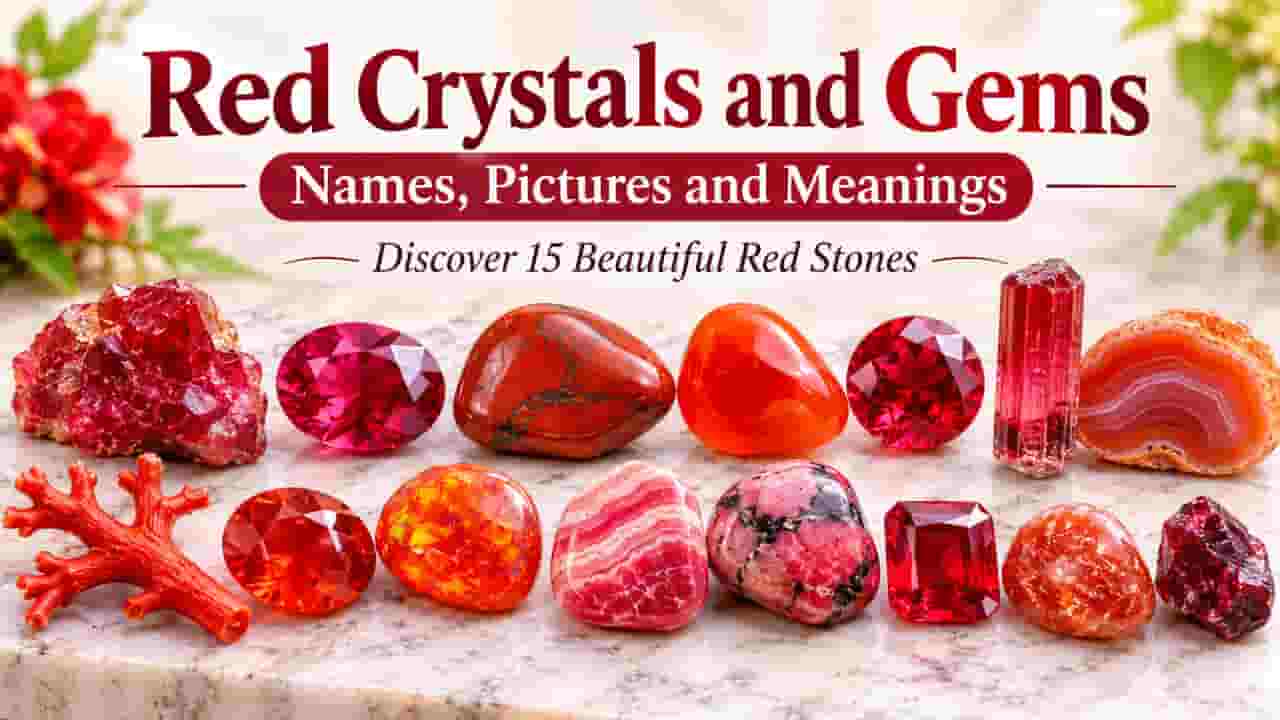
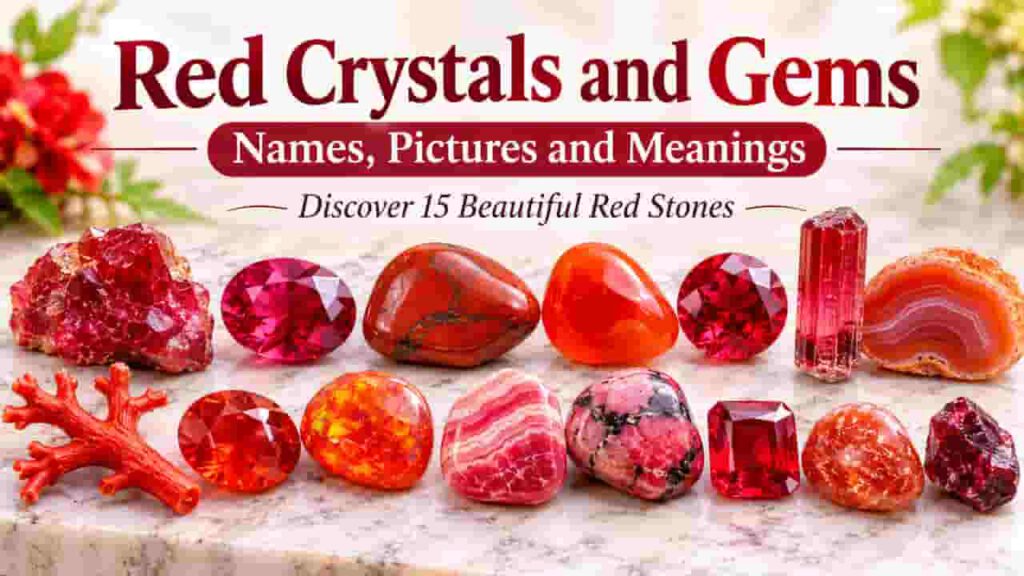
Red crystals and gemstones come in many beautiful shades—ranging from vibrant ruby-red to deep burgundy, rose-red, reddish-brown, and orange-red. Some are transparent and sparkle once cut, while others are smooth and opaque.
Popular examples of red color gemstone include ruby, red garnet, red jasper, carnelian, and red spinel. Each stone possesses its own unique color, appearance, mineral composition, and traditional significance.
In this guide, you will explore 15 red crystals and gemstones, learning their names, identifying characteristics, and traditional symbolic meanings. You will also discover the various shades of red stones, the distinction between precious and semi-precious red gemstones, and the factors to consider when selecting a gemstone.
Table of Contents
15 Beautiful Red Crystals and Gems
Not all red stones are the same. Some are so transparent that one can see right through them, some allow only a little light to pass through, and others are completely opaque. Their colors can also vary, depending on the minerals they contain and the conditions under which they were naturally formed.
Here are 15 such red crystals and gemstones that you might find interesting to learn about.
1. Ruby
The ruby is one of the most famous red precious gemstones. It belongs to the ‘corundum’ mineral family—the same family as the sapphire. Its red color is primarily due to the presence of a small amount of chromium.
The color of a ruby can range from bright red to deep red, or even a light purplish-red. High-quality stones exhibit a deep, vibrant color and are typically cut into shapes such as oval, round, or cushion.
Appearance: Ranges from transparent to semi-transparent, with colors varying from bright red to purplish-red.
Traditional Significance: Traditionally, the ruby is associated with passion, courage, love, and self-confidence. In some cultures, it is also considered a symbol of power and life force.
Use in Jewelry: Rubies are frequently used in rings, pendants, earrings, and various other types of everyday jewelry. With a hardness of 9 on the Mohs scale, they are considered highly durable gemstones.

Read our guide on Ruby to understand its general suitability.
2. Red Garnet
Red garnet is a popular gemstone, prized for its deep and captivating color. Garnet is not a single mineral, but rather a group of related minerals. ‘Almandine’ and ‘Pyrope’ are two varieties commonly associated with red garnet.
Its color can range from deep red and wine-red to dark burgundy. In low light, some stones may appear almost black, while under direct light, they reveal a vibrant red hue.
Appearance: Typically transparent to semi-transparent, featuring deep red, wine-red, or burgundy shades.
Traditional Significance: Red garnet is traditionally associated with commitment, passion, energy, and dedication. It is also frequently linked to self-confidence and determination.
Use in Jewelry: It is used in rings, necklaces, bracelets, and earrings. While its durability varies depending on the specific variety, many types of garnet are well-suited for jewelry-making, provided they are properly set and cared for.

3. Red Jasper
Red Jasper is an opaque variety of chalcedony, rich in quartz. Unlike ruby or garnet, it does not typically have a clear, lustrous appearance; instead, it possesses a solid, earthy look.
Its color can range from brick-red and rust-red to reddish-brown. Some stones feature natural patterns, spots, or darker patches, making each piece unique.
Appearance: Opaque, with an earthy, brick-red, or rust-red coloration.
Traditional Significance: Red Jasper is traditionally associated with stability, courage, and strength. In crystal traditions, it is often linked to the ability to remain steadfast, even in challenging circumstances.
Use in Jewelry: Red jasper is commonly used to create beads, pendants, cabochons (stones cut into round or oval shapes), and decorative items. Due to its earthy appearance, it is a popular choice for crystal bracelets.

Read our guide on Red Jasper: Meaning, Benefits, Properties, Uses & How to Use It to understand it.
4. Carnelian
Carnelian is a variety of chalcedony that ranges in color from orange-red to reddish-brown. It is known for its warm hues and slight translucency; when held up to the light, some stones may allow light to pass through their edges.
Its color can vary from light orange and orange-red to deep reddish-brown. For this reason, carnelian is an excellent choice for those who appreciate natural-looking red stones with warm tones.
Appearance: Translucent to opaque; typically orange-red, reddish-orange, or reddish-brown in color.
Traditional Significance: Carnelian is traditionally associated with inspiration, creativity, self-confidence, and courage. It is often chosen as a symbol for taking initiative and achieving personal goals.
Use in Jewelry: Carnelian is used in bracelets, beads, rings, pendants, and carved jewelry. It is a highly versatile gemstone for various jewelry designs, though it should be protected from hard impacts or sudden shocks.

Read our guide on Red Jasper: Meaning, Benefits, Properties, Uses & How to Use It to understand it.
5. Red Spinel
Red spinel is a beautiful gemstone that is sometimes mistaken for ruby, as both stones can share a similar red hue. However, spinel and ruby are distinct minerals.
Red spinel can appear in shades ranging from bright red and deep red to a purplish-red. When high-quality stones are expertly cut, their color becomes exceptionally vivid and brilliant.
Appearance: Transparent, featuring hues of bright red, deep red, or purplish-red.
Traditional Significance: Red spinel is often associated with energy, new beginnings, self-confidence, and strength. These meanings are rooted in cultural beliefs surrounding the gemstone rather than in scientifically proven effects.
Use in Jewelry: Red spinel is suitable for use in rings, earrings, and pendants. With a Mohs hardness of 8, it serves as a durable choice for various types of jewelry.

6. Red Tourmaline (Rubellite)
Tourmaline varieties that range from pinkish-red to deep red are commonly referred to as “rubellite.” Depending on the specific stone, the color can resemble that of a raspberry, a rose, or a deep pinkish-red.
Some rubellite gems possess a particularly intense and vibrant color, allowing them to stand out beautifully in jewelry. Others may exhibit a deeper, richer tone that leans closer to a classic, traditional red.
Appearance: Transparent to semi-transparent, displaying shades of pinkish-red, raspberry, or deep red.
Traditional Significance: Rubellite is traditionally associated with love, intimacy, the expression of emotions, and passion. It is often chosen as a symbolic gemstone representing affection and personal self-confidence.
Use in Jewelry: Rubellite is used in rings, pendants, and earrings. Since tourmaline has a Mohs hardness of approximately 7 to 7.5, jewelry featuring it should be handled with care.
7. Red Agate
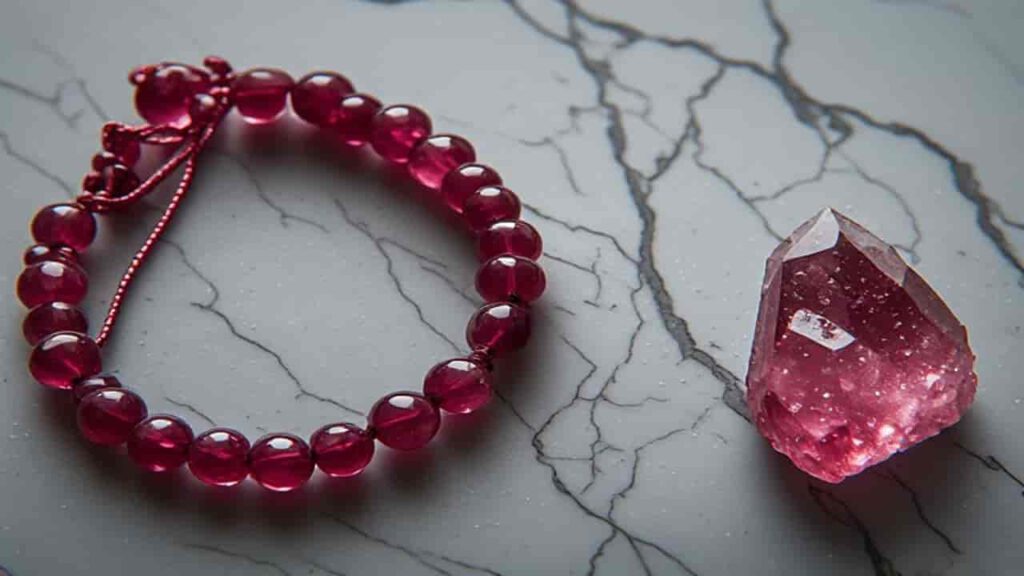
Red Agate is a variety of chalcedony that may exhibit patterns such as stripes, lines, or cloud-like formations. Its color can range from reddish-orange to deep red or brownish-red.
While some stones possess these colors naturally, others found in retail may be dyed to achieve a deeper or more uniform hue. It is advisable to verify this when purchasing the stone.
Appearance: Ranges from translucent to opaque; it often features stripes and patterns in shades of red, orange-red, or reddish-brown.
Traditional Significance: Traditionally, Red Agate is associated with balance, stability, and protection. In crystal-related traditions, it is often chosen as a reminder to remain calm and grounded.
Use in Jewelry: It is commonly used for bracelets, beads, pendants, and decorative carvings. Due to its distinctive patterns, it is quite popular in polished jewelry.

8. Red Coral
Red Coral differs from other red gemstones because it is an organic gemstone. This mineral is not formed from crystals, but rather from the hard skeletal structures of marine coral organisms.
Its color can range from pinkish-red and orange-red to deep red. High-quality coral is polished and fashioned into beads, cabochons, and other pieces of jewelry.
Appearance: Typically opaque, featuring shades of pinkish-red, orange-red, or deep red.
Traditional Significance: In certain traditional gemological systems, red coral is associated with courage, strength, self-confidence, and the capacity for action. It is also utilized within some astrological traditions.
Use in Jewelry: Red coral is used in necklaces, bracelets, rings, and pendants. As it is softer than many other gemstones, it requires careful handling. Buyers should also be mindful of its origin and ensure they purchase only from responsible sellers who possess the legal authorization to sell it.
9. Red Zircon
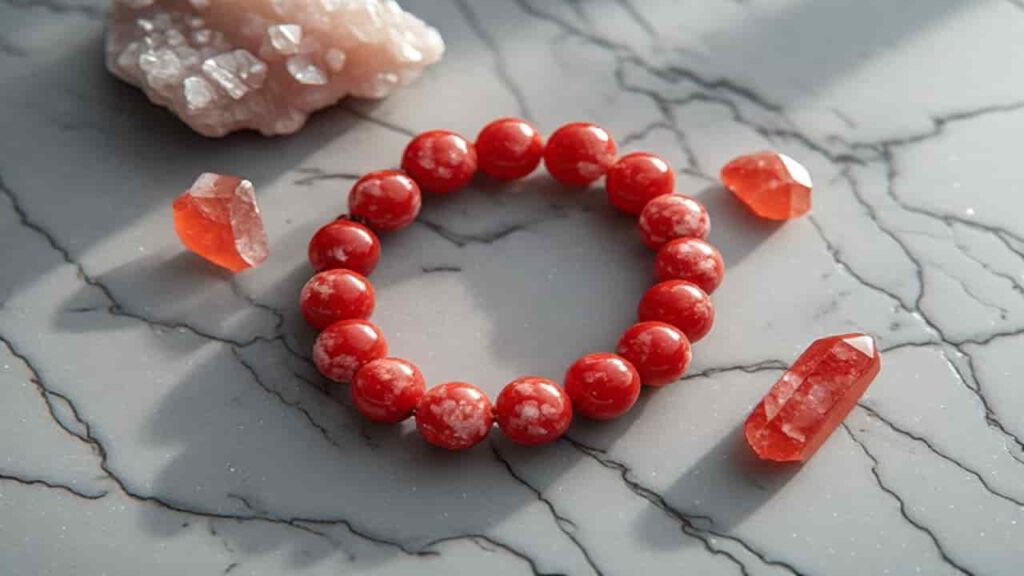
Red Zircon is a natural gemstone that can appear in shades of red-orange, brownish-red, and deep red. Zircon is a natural mineral; it should not be confused with ‘cubic zirconia,’ which is a different substance often used as a diamond simulant.
Some red and brownish-red zircons possess a high degree of brilliance due to their ability to reflect light. Their appearance can vary based on their cut and the unique characteristics of each individual stone.
Appearance: Transparent; typically red-orange, brownish-red, or deep red.
Traditional Significance: Traditionally, zircon is associated with intelligence, clarity, and self-confidence. According to some modern beliefs, its red varieties are also linked to energy and passion.
Use in Jewelry: Red zircon can be used in rings, earrings, and pendants. It is less resistant to wear or breakage compared to ruby or spinel; therefore, it requires secure setting and careful handling.
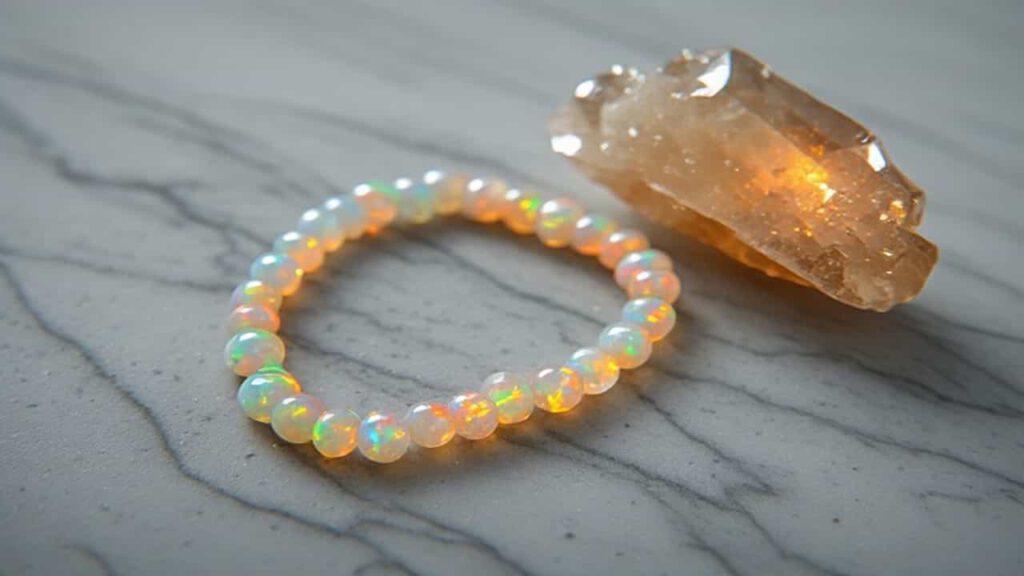
10. Fire Opal
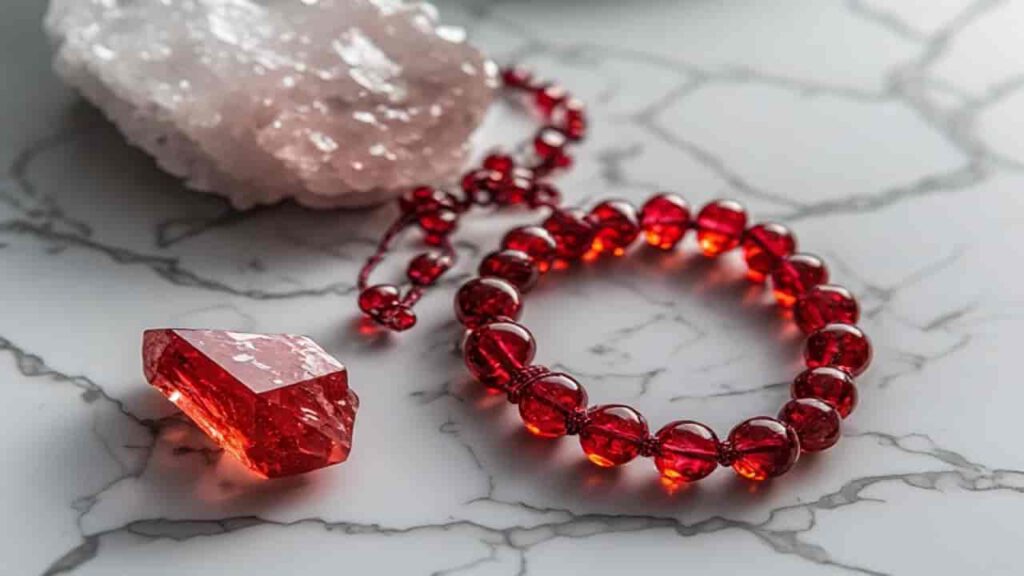
Fire opal is known for its warm colors, which can range from yellow and orange to orange-red and red-orange. Some stones exhibit a shimmering display of colors—a phenomenon known as ‘play-of-colour’—while others appear solid yet vibrant.
Although it is categorized among red and orange-red gemstones, not every fire opal is entirely red. Its warm colors are the reason it has been included in this list.
Appearance: Typically ranging from semi-translucent to transparent, with colors spanning yellow, orange, or orange-red. Some stones exhibit a ‘play-of-color’ (a shimmering effect).
Traditional Significance: Fire opal is traditionally associated with creativity, enthusiasm, passion, and inspiration.
Use in Jewelry: It is used in rings, pendants, and earrings. Compared to many other gemstones, opal is quite delicate; therefore, it should be protected from physical impact, sudden temperature changes, and improper cleaning methods.
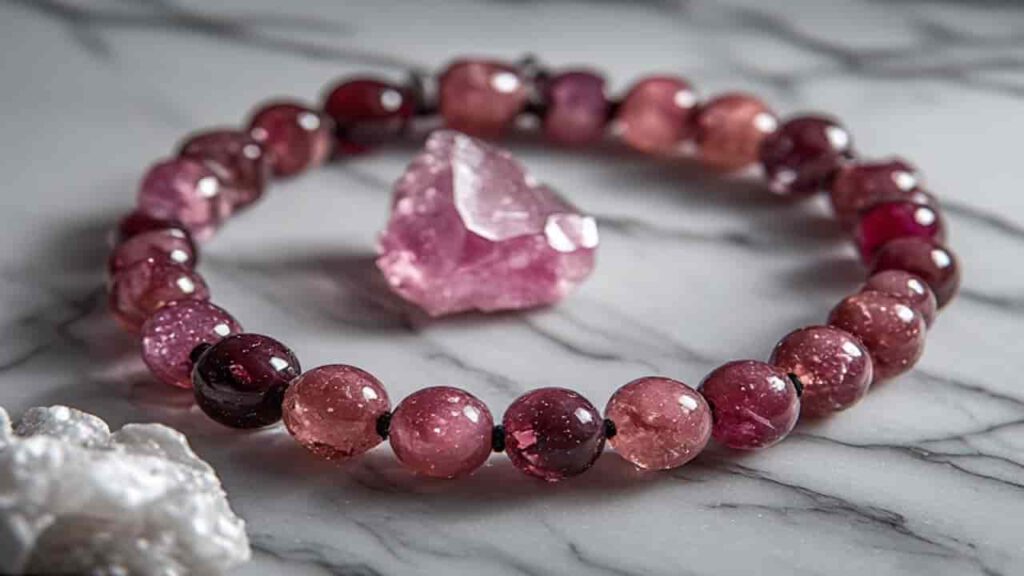
11. Rhodochrosite
Rhodochrosite is a manganese carbonate mineral, known for its pink to red hues. Many specimens feature attractive white or pale pink bands, which give the stone a layered appearance.
Its color is often closer to ‘rose-red’ or pinkish-red, rather than a deep ruby-red. Some stones are cut as ‘cabochons’ (rounded or oval shapes without facets), while others are polished for use as decorative stones.
Appearance: Pinkish-red to reddish-pink, often with white or light-colored bands.
Traditional Significance: Rhodochrosite is traditionally associated with compassion, love, kindness, and emotional connection. It is frequently used as a symbol of self-love and nurturing relationships.
Use in Jewelry: It can be used for pendants, earrings, and rings intended for occasional wear. However, since rhodochrosite is quite soft, it is best suited for jewelry that is not at high risk of being bumped or scratched.
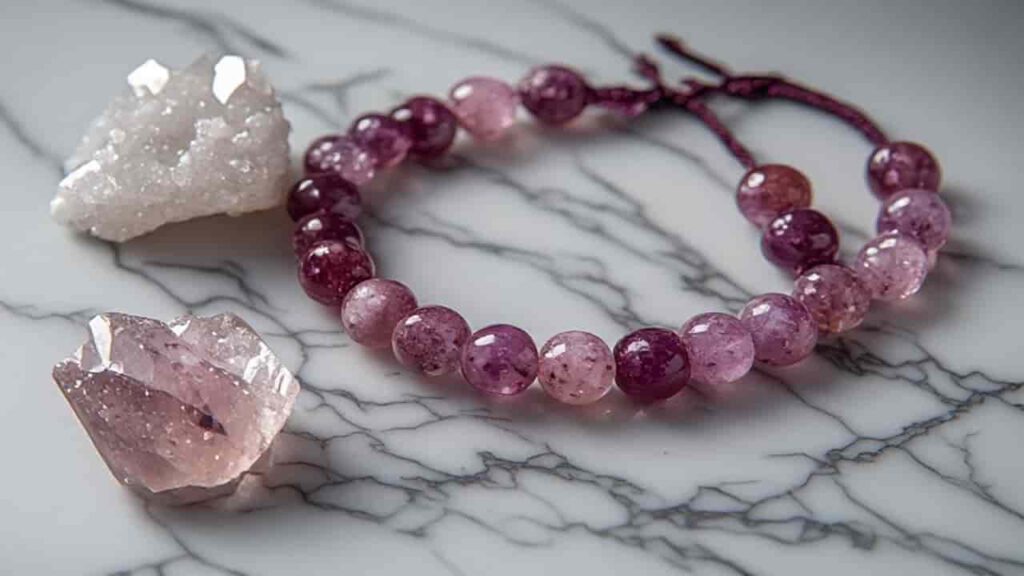
12. Rhodonite
Rhodonite is a mineral ranging in color from pink to deep pinkish-red, often featuring dark brown or black streaks. These natural markings give it a distinctive appearance and help distinguish it from other red stones.
Some specimens have a fairly uniform pinkish-red color, while others display clear, dark-colored patterns on their surface.
Appearance: Opaque to translucent; typically deep pinkish-red with dark-colored streaks.
Traditional Significance: Rhodonite is traditionally associated with compassion, forgiveness, emotional balance, and friendship. In crystal lore, it is frequently linked to kindness and understanding.
Use in Jewelry: Rhodonite is commonly fashioned into beads, pendants, and cabochons (stones cut with a smooth, rounded surface rather than facets). As it is not as hard as ruby or spinel, it is best to protect it from scratches and impacts.
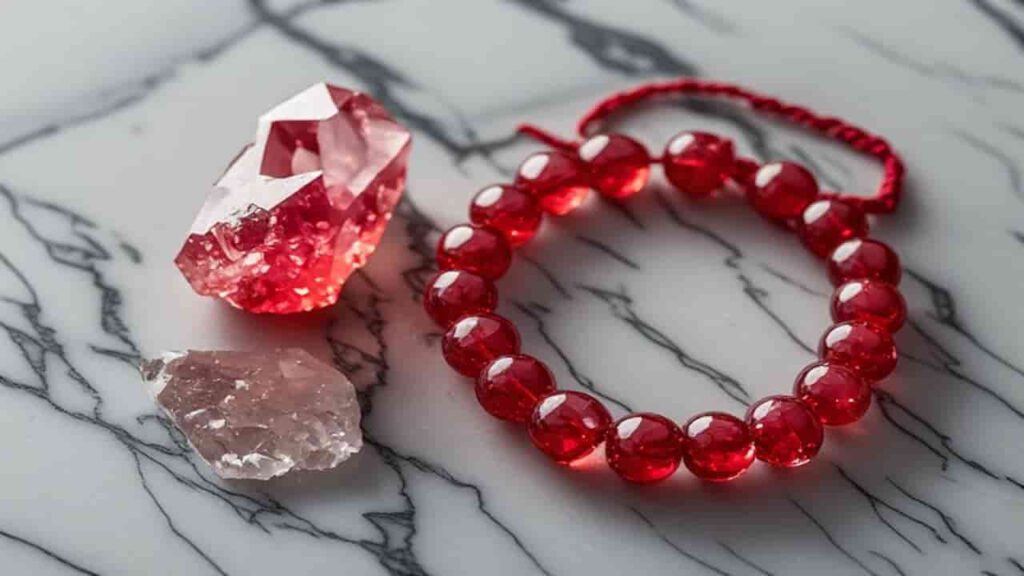
13. Red Beryl
Red beryl is one of the rarest red gemstones. It belongs to the beryl mineral family, which also includes emerald and aquamarine.
Its color can range from raspberry-red to purplish-red. It is highly valued among gemstone collectors because high-quality specimens are extremely rare, and finding large, clear stones is difficult.
Appearance: Transparent; ranges from raspberry-red to purplish-red.
Traditional Meaning: There is no single, definitive traditional meaning associated with red beryl in crystal lore. In modern symbolic interpretations, it may be linked to passion, individuality, and self-confidence.
Use in Jewelry: Red beryl is primarily known as a rare collector’s gemstone. Due to its extreme rarity and high cost, it is generally not used in everyday jewelry.

14. Red Sunstone
Red sunstone is a gemstone from the feldspar family, which can appear orange-red, copper-red, or reddish-brown. Some stones contain tiny, shimmering particles that create a sparkle when the stone is moved under light.
This shimmering appearance is its most distinctive feature. However, not all sunstones are red; they can also be found in orange, peach, and other colors.
Appearance: Semi-transparent to opaque; orange-red or copper-red in color, sometimes exhibiting a shimmering effect.
Traditional Meaning: Traditionally, sunstone is associated with optimism, warmth, enthusiasm, and self-confidence.
Use in Jewelry: Red sunstone is used for beads, pendants, cabochons (stones cut with a smooth, rounded surface rather than facets), and in certain types of rings. Its durability depends on the quality of the stone and the design of the jewelry piece; therefore, it is best to use a protective setting.

15. Cuprite
Cuprite is a copper oxide mineral that can appear in shades of deep red, reddish-brown, or crimson. Due to its rich colors and crystal structures, it is quite popular among mineral collectors.
Unlike ruby or garnet, cuprite is not a common choice for everyday jewelry. Specimens are generally collected for their aesthetic appeal rather than being worn as jewelry (such as in bracelets or rings).
Appearance: Ranges from deep red to reddish-brown, sometimes featuring darker or metallic-looking areas.
Traditional Significance: In crystal-related traditions, cuprite does not have a single, universally recognized traditional meaning. Some modern crystal practitioners associate it with ‘grounding’ and strength, though these interpretations are not universally held.
Use in Jewelry: Cuprite is primarily a collector’s mineral. It should not be assumed that every mineral specimen is suitable for use in jewelry. Purchase it only from a knowledgeable mineral dealer and follow their specific recommendations regarding its care and maintenance.
Different Shades of Red Stones
Not all red stones are the same in color. Some are very bright and deep-hued, while others may appear dark, earthy, or light pinkish-red. Observing the shade of a stone can help you identify what kind of gemstone it is.
Bright Red Stones
Bright red stones typically have a very intense and clear color. They appear highly vibrant in natural light and are frequently used in statement jewelry.
Examples include:
- Ruby: Ranging from bright red to purplish-red.
- Red Spinel: Ranging from deep red to very dark red.
- Red Beryl: Ranging from raspberry-red to purplish-red.
Dark Red and Burgundy Stones
Dark red stones possess a deep, rich color. In low light, they may appear wine-colored, brownish-red, or even nearly black.
Examples include:
- Red Garnet: Often deep red, wine-red, or burgundy.
- Dark Red Jasper: Can be brick-red or a deep, earthy red.
- Some Red Zircon: May exhibit deep reddish-brown tones.
Pinkish-Red Stones
Some gemstones fall somewhere between pink and red. They may appear slightly lighter than bright red stones and can feature shades of rose, raspberry, or a soft pinkish-red.
Examples include:
- Rubellite: Ranging from pinkish-red to raspberry-red.
- Rhodochrosite: Ranging from pink to rose-red.
- Rhodonite: Rose-red, often featuring dark-colored streaks or vein-like patterns.
Orange-Red Stones
Orange-red stones have a distinctly warm appearance. Depending on the lighting, they may appear orange, red, or reddish-brown.
Examples include:
- Carnelian: Ranges from orange-red to reddish-brown.
- Fire Opal: Ranges from yellow-orange to orange-red.
- Red Sunstone: Ranges from orange-red to a copper-like red.
- Red Agate: May feature reddish-orange bands or stripes.
Precious and Semi-Precious Red Gemstones
When shopping online or reading about gemstones, you may come across red gemstones categorized as either ‘precious’ or ‘semi-precious.’ These are traditional commercial terms, not scientific benchmarks for measuring the quality of a gemstone.
A ruby is traditionally considered a ‘precious’ gemstone. Garnet, spinel, tourmaline, zircon, carnelian, and various other colored gemstones are generally classified as ‘semi-precious.’
However, this classification does not imply that every ‘precious’ gemstone is necessarily more valuable than any ‘semi-precious’ one. A rare, high-quality red spinel or tourmaline can be far more valuable than a low-quality ruby.
The value of a crystals that are red depends on several factors:
- Color: A deep, attractive, and evenly distributed color can enhance a gemstone’s value.
- Clarity: The number, size, and visibility of internal characteristics (inclusions) within the gemstone are significant.
- Cut: A well-executed cut enhances the gemstone’s appearance and determines how it reflects light.
- Size: Large, high-quality gemstones can be difficult to find.
- Rarity: Gemstones that are exceptionally rare can command very high prices.
- Treatment: Some gemstones undergo specific processes (treatments) to improve their color or clarity. Since these processes can affect a gemstone’s value, information regarding them should always be disclosed.
If you are purchasing an expensive red gemstone, be sure to ask the seller about its identity—whether it is natural or synthetic—whether it has undergone any specific treatments, and whether a lab report is available. Do not determine the value of a gemstone based solely on its color.
What Do Red Crystals Symbolize?
In various cultures, the color red has long been associated with intense emotions and powerful ideas. For this reason, red crystals and gemstones are often imbued with symbolic meanings related to passion, courage, strength, and vitality.
Here are some common traditional beliefs:
- Passion and Love: The color red is frequently linked to romantic feelings, affection, and deep emotional connections.
- Courage: Red stones are sometimes chosen as symbols of bravery and the willpower to face challenges.
- Inspiration: Their deep, striking color is often associated with enthusiasm, determination, and the initiative to take action.
- Strength: In certain crystal traditions, red stones represent inner strength, stability, and endurance.
- Vitality: The color red is often viewed as a symbol of energy, warmth, and an active approach to life.
The meanings can vary depending on the specific red stone. For instance, the ruby is traditionally associated with passion and courage, while red jasper is often linked to stability and grounding. Carnelian is typically associated with inspiration and creativity.
These meanings stem from cultural, spiritual, and modern crystal traditions. They are personal or symbolic interpretations rather than scientifically proven effects. You might choose a red stone simply because you appreciate its color, appearance, or the traditional beliefs associated with it.
How to Choose a Red Crystal or Gemstone
Choosing a red stone becomes easier when you know what matters most to you. You might be looking for a gemstone for jewelry, a mineral specimen for decoration, or a crystal that holds traditional significance and resonates with you personally.
Consider the following points before making a purchase:
- Choose your preferred shade
- Red gemstones come in a variety of shades. If you prefer a vibrant, bright red, ruby and red spinel are excellent choices. For a deep, wine-red hue, red garnet might be the right fit, while carnelian is a great option if you lean toward orange-red tones.
- Whenever possible, look at images taken in natural light. Gemstones can appear different under store lighting or in edited photographs.
- Consider how you intend to use it
- If you are looking for a stone for a ring or bracelet to be worn daily, durability is key. Ruby and spinel are quite durable, whereas stones like opal, rhodochrosite, and rhodonite require more careful handling.
- For decorative purposes or a mineral collection, the stone’s appearance and quality are more important than its ability to withstand daily wear and tear.
- Verify the identity of the gemstone
- Many red gemstones can look quite similar. For instance, ruby and red spinel may have very comparable colors, yet they are distinct minerals. Also, be careful not to mistake natural zircon for cubic zirconia.
- If you are purchasing a high-value item, always request an identification report from a recognized laboratory.
- Determine your budget
- Red gemstones are available at a wide range of price points. Rubies and red beryl can be quite expensive, especially when they possess excellent color and clarity. Varieties such as carnelian, red jasper, and garnet are often available at more affordable prices.
- Do not assume that all gemstones with the same name will have the same price; instead, compare the prices of stones that share similar quality characteristics.
- Inquire about treatments and origin
- Some gemstones undergo heating, dyeing, or other treatments to enhance their appearance. A treatment does not necessarily mean the stone is of poor quality, but you should be aware of it before making a purchase.
- Additionally, ask whether the gemstone is natural, synthetic, or an imitation. A synthetic gemstone has the same chemical composition and crystal structure as a natural one, but it is created in a laboratory. An imitation, on the other hand, merely resembles the genuine stone in appearance and may be composed of entirely different materials.
FAQs About Red Crystals and Gems
What are the names of red crystals?
Some well-known red crystals and gemstones include Ruby, Red Garnet, Red Jasper, Carnelian, Red Spinel, Rubellite Tourmaline, Red Agate, Red Zircon, Rhodochrosite, Rhodonite and Red Beryl.
Other red or reddish materials include Red Coral and Fire Opal. Coral is an organic gem material, while Opal is a mineraloid rather than a crystal in the usual mineralogical sense.
What is the most popular red gemstone?
Ruby is probably the best-known red precious gemstone. It is famous for its rich red colour and long history in jewellery. Red Garnet is another popular choice, especially for people who like deep red and burgundy shades.
What is the most valuable red gemstone?
Fine-quality Ruby is among the most valuable red gemstones, particularly stones with exceptional colour, clarity, size and desirable origin. Rare Red Beryl can also command high prices because gem-quality material is extremely limited.
There is no single price for either stone. Value depends on the individual gemstone and its quality.
Which red stones are dark red?
Red Garnet is a common example of a dark red gemstone. Some varieties have wine-red or burgundy shades. Dark Red Jasper and certain Red Zircon specimens can also show deep reddish-brown colours.
What is the difference between red crystals and red gemstones?
The terms are often used together, but they do not mean exactly the same thing.
A crystal is a solid material with an organised internal structure. A gemstone is a material valued for its appearance, durability or rarity and used in jewellery or decoration.
Some red crystals, such as Ruby and Garnet, are also gemstones. However, not every red mineral specimen is suitable for jewellery, and not every gem material is a mineral crystal. Red Coral, for example, is an organic gem material.
Are red gemstones always natural?
No. Red gemstones may be natural, laboratory-created, treated or imitations. Some natural stones are also treated to improve their colour or clarity.
If you want a natural red gemstone, ask the seller to confirm its identity and disclose any treatments. For an expensive purchase, consider an independent gem laboratory report.
Which red gemstones are suitable for jewellery?
Ruby, Red Spinel, Garnet, Carnelian and many varieties of Red Tourmaline are used in jewellery. Red Zircon, Red Agate and Red Coral are also used, although their care requirements differ.
The best choice depends on the type of jewellery and how often you plan to wear it. Harder stones are generally better suited to daily wear, while softer or more delicate materials need protective settings and careful handling.
Conclusion:- Red Crystals and Gems
Red crystals and gemstones come in a wide variety of colors, appearances, and traditional meanings. Ruby, red spinel, and garnet are popular among those who prefer gemstones in bright or deep red hues. Red jasper, carnelian, and red agate offer a more natural, earthy look, while rubellite, rhodochrosite, and rhodonite feature lighter, pinkish-red shades.
Before choosing a red gemstone, consider its appearance, durability, price, and intended use. If you are purchasing an expensive gemstone, ensure that you are fully informed about its identity and any treatments it may have undergone.
Whether you prefer a vibrant red precious gemstone or a simple polished red crystal, there are plenty of options available for you to choose from.
If you wish to deepen your spiritual journey and discover how different gems can balance your mind, body, and spirit, be sure to explore our complete Crystal Stones Meanings, Uses, Power & Pictures Guide. This master resource covers everything from identifying raw minerals to unlocking their unique vibrational energies, complete with high-resolution visual references to help you choose the right crystal for your needs.