

Amethyst is traditionally associated with peace, spiritual awareness, protection, clarity, and inner wisdom. Across various cultures and crystal traditions, it has acquired numerous symbolic meanings due to its purple hue and long history.
In this guide, you will learn what amethyst symbolizes, its traditional spiritual significance and historical importance, and how people commonly use it for meditation and self-reflection.
What are the Meanings of Amethyst?
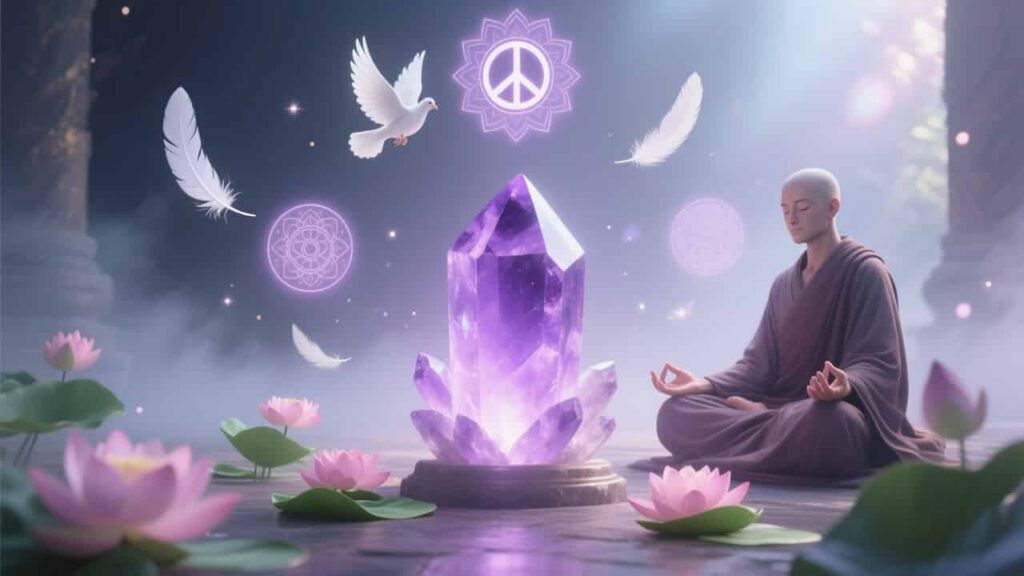
Amethyst symbolizes peace, protection, and spiritual growth. Known as a stone of clarity, it calms the mind, enhances intuition, and promotes emotional balance. Amethyst is also linked to the crown chakra, supporting meditation, higher awareness, and connection to divine energy.
| Amethyst meaning | What to explain |
|---|---|
| Peace and calm | Why Amethyst is traditionally associated with peace |
| Spiritual awareness | Its connection with spiritual practices |
| Protection | Traditional beliefs about protection |
| Clarity and wisdom | Traditional symbolism around clear thinking |
| Intuition | Its association with intuition and inner awareness |
| Sobriety and self-control | Historical Greek/Roman lore |
| Transformation | Modern spiritual interpretations |
| Inner strength | Symbolic association with resilience |
| Balance | Traditional interpretations of calm and equilibrium |
| Devotion | Historical/religious associations |
| Meditation | Why people traditionally use it during reflection |
| Higher awareness | Spiritual symbolism |
| February birthstone | Its cultural/birthstone significance |
| Royalty and spirituality | Historical/religious symbolism |
Also Read: Amethyst Crystal Under Pillow Benefits
Table of Contents
Let’s dive into the fascinating world of amethyst!

What is a Amethyst?
If you are exploring the properties of gemstones and mineralogy, you might ask: What is amethyst, and what does it symbolize?
Amethyst is a renowned purple variety of quartz. It is prized for its distinctive purple hues, geological durability, and rich history in cultural folklore and jewelry design.
Here is a brief, fact-based overview of amethyst, distinct from traditional folklore:
- Mineral Family: Amethyst belongs to the quartz mineral group. According to the Gemological Institute of America (GIA), it has a Mohs hardness of 7, making it durable and suitable for daily wear in jewelry such as rings and pendants.
- Vibrant Purple Color: Its color ranges from a pale, translucent lilac to a deep, intense royal purple.
- Geological Formation and Color Source: Amethyst forms within cavities (geodes) in rocks through specific geological processes. Scientifically, its distinctive purple color results from the interaction of iron impurities with prolonged natural radiation.
- February Birthstone: Amethyst is officially recognized as the traditional birthstone for the month of February.
Visit detailed guide on Real vs. Fake Amethyst
Amethyst Symbolism and History
Beyond its mineralogical facts, amethyst has a long, documented history across ancient civilizations:
- Greco-Roman Traditions: Ancient Greeks and Romans highly valued amethyst in fine art and jewellery; They associated its purple hues with regal elegance and tranquillity.
- Cultural Folklore: Across various traditions, amethyst has historically been viewed as a symbol of clarity, inner balance, and spiritual contemplation.
(Note: We will soon release a comprehensive, ultimate guide covering everything you need to know about amethyst—stay tuned for the link!)
What Does Amethyst Represent
Amethyst is often associated with:
- Peace and stability: Its calming energy promotes relaxation and stress relief.
- Spiritual growth: It is associated with higher consciousness and intuition.
- Protection: Believed to protect against negative energies.
- Wisdom and clarity: Enhances mental focus and decision-making abilities.
- Love and relationships: Promotes harmony and understanding.
| Symbolic meaning | Traditional association |
|---|---|
| Peace | Calmness and tranquility |
| Spiritual awareness | Meditation and spiritual reflection |
| Protection | Protection from negative influences in spiritual traditions |
| Clarity | Clear thinking and self-reflection |
| Intuition | Inner awareness and spiritual insight |
| Sobriety | Historical association with protection from intoxication |
| Wisdom | Knowledge, reflection and thoughtful decision-making |
| Inner strength | Personal resilience and self-awareness |
Ultimately, amethyst represents a balance of spiritual, emotional, and mental well-being.
Do you want to learn more about how these benefits work and how you can use this crystal in your daily life? Read our full guide on the benefits of Amethyst for complete details!
The Meaning of Amethyst: Spiritual, Emotional, and Symbolic
Amethyst is far more than just a beautiful purple stone. For centuries, people have used it to cultivate peace of mind, emotional healing, and a deep connection to the spiritual realm.
Here is a simple yet detailed breakdown of what amethyst signifies at various levels:
Spiritual Meaning
- Opening the Third Eye: In the world of crystals, amethyst is renowned as a powerful stone for the Third Eye and Crown chakras. It helps open the mind to heightened awareness, intuition, and spiritual growth.
- Connecting to the Divine: Many use amethyst during meditation, believing it acts as a bridge between the physical and spiritual worlds, making it easier to quiet the mind and listen to one’s inner voice.
- Clearing Negative Energy: It is believed to function as an energetic shield, dispelling heavy, negative thoughts or spiritual blockages and replacing them with a clear, serene aura.
Emotional Meaning
- Soothing Stress and Anxiety: One of the most common emotional uses of amethyst is to calm a troubled or overactive mind. Holding or wearing amethyst can induce a wave of deep tranquility when you are feeling stressed, overwhelmed, or anxious.
- Emotional Balance: It helps center your emotions, curbing extreme mood swings and providing a sense of stability during challenging times.
- Better Sleep: By calming the nervous system, amethyst helps ward off nightmares and quiet racing thoughts at night, promoting deep, restful sleep. Many people keep it near their beds for this reason.
Symbolism
- Peace and Serenity: With its calming purple hue and soothing energy, amethyst is a universal symbol of peace, tranquility, and inner harmony.
- Understanding and Clarity: Historically, it has symbolized clear thinking, wisdom, and composure—helping people make smart, grounded decisions rather than acting out of anxiety or anger.
- Royalty and Power: In ancient times, because the deep purple color was rare and costly, amethyst became a powerful symbol of royalty, wealth, and high spiritual status, worn by kings, queens, and spiritual leaders.
(Note: We will soon release a comprehensive, ultimate guide detailing the full significance and uses of amethyst—stay tuned for the link!)
13 Traditional Meanings and Symbols of Amethyst
If you are exploring alternative wellness traditions and cultural history, you might wonder: what are the traditional meanings and symbolic qualities of amethyst?
In crystal folklore and cultural history, amethyst is regarded as a symbol of peace, spiritual awareness, mental clarity, and emotional balance.
Here is a brief overview of 13 traditional meanings and symbolic qualities associated with amethyst:
- Peace and Tranquillity
- In crystal lore, amethyst serves as a symbol used to alleviate mental stress, promote relaxation, and foster a peaceful atmosphere in daily life.
- Spiritual Awareness
- Historically linked to higher consciousness, alternative traditions view amethyst as a symbol of spiritual seeking, inner growth, and a connection to profound philosophical thought.
- Protection
- In both ancient and modern folklore, amethyst is often considered a protective talisman. It is traditionally believed to shield the wearer from negative environments or harmful thoughts.
- Clarity and Wisdom
- Associated with clear thinking, amethyst is frequently used in mindfulness practices. It serves as a reminder to rise above confusion and make decisions based on clear, rational thought.
- Intuition
- In alternative circles, it is often referred to as the stone of intuition. It is traditionally believed to help individuals connect with their inner voice and gut feelings during self-reflection.
- Temperance and Self-Control
- Historically, the name ‘Amethystos’ (derived from an ancient Greek word meaning “not intoxicated”) has linked the stone to a long-standing tradition of temperance, clear thinking, and self-control.
- Inner Strength
- In cultural folklore, amethyst is regarded as a symbol of personal endurance. It is traditionally worn to boost stamina and courage during challenging times in life.
- Meditation and Contemplation
- Due to its calming purple hue, practitioners often use amethyst as a visual focal point during meditation to aid concentration and quiet the noise of the mind.
- Emotional Balance
- According to folklore, the gentle and stabilizing energy of amethyst helps balance mood swings and provides solace during periods of emotional turbulence.
- Focus and Concentration
- In study or work environments, amethyst is sometimes kept nearby to serve as a reminder to maintain mental focus and prevent distraction.
- Sleep and Rest
- Associated with tranquillity, amethyst is often kept near the bedside as part of a pre-sleep routine, symbolizing peaceful rest.
- Creative Inspiration
- Some creative writers and artists view amethyst as a source of inspiration; they harness its symbolic significance to overcome mental blocks and foster imaginative thinking.
- New Beginnings and Renewal
- Finally, amethyst is frequently chosen as a symbolic gift for new beginnings; it represents personal transformation, positive change, and the start of new chapters in life. Understanding the Distinction
These attributes are rooted entirely in cultural folklore, historical traditions, and alternative wellness practices. They are not scientifically proven physical effects, medical treatments, or psychological therapies.
Those who wish to incorporate amethyst into their daily lives typically wear it as jewellery—such as rings, pendants, and bracelets—or keep it as a decorative mineral specimen.
What Is the Spiritual Meaning of Amethyst?
If you are exploring the cultural and spiritual significance of gemstones, the question might arise: what is the spiritual meaning of Amethyst?
In alternative wellness traditions and ancient folklore, Amethyst is considered a symbol of spiritual growth, inner peace, and higher consciousness.
Here is how its spiritual symbolism is traditionally understood:
- Connection to higher consciousness: In many spiritual practices, Amethyst is associated with the ‘third eye’ and the ‘crown chakra’ (at the top of the head). It is a traditional symbol for enhancing intuition, deepening meditation, and connecting with inner wisdom.
- A symbol of emotional peace: Due to its calming purple hue, this stone is regarded in alternative traditions as a symbol of tranquillity. It helps soothe mental turmoil and fosters emotional balance.
- Beliefs regarding purification and protection: In ancient folklore, purple stones like Amethyst were often viewed as protective talismans that helped ward off negative thoughts and create a peaceful atmosphere.
These spiritual interpretations are based entirely on cultural traditions, symbolism, and alternative beliefs. They do not represent scientifically proven energetic powers, medical treatments, or physical effects.
The Meaning of Amethyst Colors
If you are curious about how the various shades of purple influence the beliefs surrounding this crystal, you might wonder: do the different colors of amethyst traditionally hold distinct meanings?
While all natural amethysts are generally regarded as symbols of peace and clarity in crystal lore, practitioners of alternative therapies sometimes distinguish subtle differences in meaning based on the depth and tone of the purple hue.
Here is how the different colors of amethyst are traditionally interpreted in alternative practices:
- Deep Royal Purple Amethyst: Traditionally, this is seen as a symbol of deep introspection, authority, and heightened spiritual awareness. Due to its intense color, deep purple stones are often associated with profound meditation and emotional strength.
- Lavender and Pale Lilac Amethyst: These are frequently associated with gentle comfort, relaxation, and soothing energy. In alternative traditions, lighter shades often symbolize stress relief, gentle tranquility, and emotional solace.
- Green Amethyst (Prasiolite): Although technically a heat-treated quartz or naturally occurring green quartz, green varieties are sometimes associated in alternative traditions with growth, new beginnings of the heart, and emotional balance—rather than the focus on the Crown Chakra typical of purple amethyst.
- Ametrine (A blend of Amethyst and Citrine): This is a bi-colored quartz that combines purple amethyst and yellow citrine. In the realm of crystal lore, it is traditionally viewed as a symbolic bridge connecting mental clarity, creativity, and inner peace.
Geological Facts vs. Beliefs Associated with Color
From a mineralogical perspective (as certified by the Gemological Institute of America), variations in the color of amethyst are entirely due to geological factors. The intensity of the purple hue depends solely on the concentration of natural iron impurities and the amount of natural radiation absorbed by the crystal as it formed within cavities in volcanic rock.
These varying shades reflect natural chemical differences rather than distinct spiritual properties.
Amethyst and the Crown Chakra
If you are exploring concepts of alternative energy, you might wonder: what is the connection between amethyst and chakra traditions?
In crystal-related beliefs and alternative energy systems, amethyst is traditionally associated with the Crown Chakra and the Third-Eye Chakra. It is considered a symbol of spiritual awareness, intuition, and higher consciousness.
Here is a simple explanation of these traditional associations:
- Connection to the Crown Chakra: Located at the very top of the head, the Crown Chakra is viewed in alternative systems as a symbol of connection to spiritual wisdom, cosmic energy, and inner peace. Due to its deep purple hue, amethyst is frequently used to represent this key center during meditation.
- Connection to the Third-Eye Chakra: Situated between the eyebrows, the Third-Eye Chakra is traditionally linked to intuition, imagination, and self-reflection. In crystal lore, amethyst is often used as a symbolic tool to foster mental clarity and introspection.
- Understanding the Tradition: Within these belief systems, incorporating amethyst into routines of quiet contemplation or mindfulness is seen as a way to honor these symbolic themes. These practices are traditional methods for personal focus, rather than techniques that literally activate, heal, or alter physical or biological systems.
These chakra-related associations are based entirely on alternative traditions and cultural lore. They do not represent scientifically proven biological powers, medical treatments, or physical effects.
Amethyst: Planetary Associations, Elements, and Birthstone Status
If you are exploring the astrology and calendar traditions associated with gemstones, you might be wondering: with which planets, elements, and birthstone categories is amethyst associated?
In crystal lore and traditional astrology, amethyst is linked to specific planets, elemental symbols, and the month of February.
Here is some accessible information regarding these traditional associations, suitable for beginners:
Planetary Associations (Jupiter and Saturn)
In alternative crystal astrology, amethyst is traditionally linked to two planetary symbols:
- Jupiter: Historically regarded as the planet of wisdom, expansion, and higher learning. Jupiter’s connection to amethyst reflects spiritual growth and a broad perspective on life.
- Saturn: Saturn’s traditional association with discipline and inner strength positions amethyst as a gemstone that helps maintain emotional stability and tranquillity during challenging times.
Elemental Associations (Water and Air)
Crystal traditions often link minerals to natural elements to illustrate their traditional properties:
- Water Element: Symbolizing emotion and intuition, the connection to the water element highlights how amethyst is used to calm a turbulent mind and foster emotional peace.
- Air Element: Symbolizing intellect and higher thought, the connection to the air element reflects how amethyst is used to clear mental confusion and aid in self-reflection.
Birthstone Status and Zodiac Connection
- February Birthstone: Amethyst is officially recognized worldwide as the traditional birthstone for the month of February.
- Zodiac Associations: In alternative astrology, amethyst is a primary birthstone for both Aquarius (helping to balance the high energy of mental activity with calm and stability) and Pisces (enhancing natural intuition and empathy).
These associations with planets, elements, and astrology are based entirely on cultural traditions and alternative crystal folklore. They do not represent scientifically proven physical powers, astrological certainties, or medical treatments.
(Note: Here is a comprehensive guide to understanding the astrological and planetary connections of amethyst—stay tuned for the link!)
The Significance of Amethyst in History and Culture
If you are interested in the cultural background of gemstones, you might wonder: what role has amethyst played in human history and traditions?
For centuries, amethyst has been highly valued by ancient civilizations, religious leaders, and modern crystal experts alike, thanks to its captivating purple hue and rich symbolic history.
Here is how the significance of amethyst has evolved across different eras:
1. Ancient Greek and Roman Connections
In ancient Greece and Rome, amethyst held a special place in art, mythology, and daily life:
- Origin of the Name: The ancient Greek word amethystos means “not intoxicated.” Consequently, a long-standing cultural tradition associated the gem with sobriety and clear thinking.
- Status and Adornment: Wealthy Romans and Greeks fashioned amethyst into exquisite intaglio rings, amulets, and drinking vessels. They regarded this purple stone as a symbol of nobility and protection.
2. Religious and Historical Associations
Throughout the Medieval and Renaissance periods, amethyst became deeply intertwined with sacred architecture and royal symbolism:
- Religious Adornment: Christian bishops and clergy frequently wore amethyst rings, symbolizing spiritual purity, piety, and a connection to higher guidance.
- Royal Symbolism: As the color purple historically signified regal splendor and power, European monarchs set large amethysts into their crowns, scepters, and ceremonial jewelry.
3. Modern Crystal Traditions
In today’s alternative wellness and crystal communities, amethyst remains one of the most popular minerals:
- Mindfulness and Decor: People use amethyst clusters, geode slices, and polished pieces as reminders of peace, emotional balance, and mental clarity.
- Decorative and Wearable Art: Beyond its symbolism, modern designers value amethyst for its durability (a hardness of 7 on the Mohs scale) and its diverse shades of purple, utilizing it in rings, necklaces, and home decor.
Please note: These historical accounts, cultural traditions, and alternative practices are shared for educational and informational purposes only. They do not constitute scientific guarantees or medical treatments.
How People Traditionally Use Amethyst
If you are looking for ways to incorporate amethyst into your daily life, you might wonder: how do people traditionally use amethyst in their personal routines?
In crystal traditions and alternative wellness practices, people often incorporate amethyst—a symbol of peace and mindfulness—into meditation, jewelry, or their living spaces.
Here are four common ways people traditionally use amethyst:
- Meditation: Practitioners often hold a smooth amethyst tumbled stone or keep a small cluster nearby while meditating. It serves as a physical focal point to help quiet the mind and create a peaceful atmosphere.
- Carrying the stone: Many people keep a small, polished amethyst stone in their pocket or a pouch as a daily reminder of their personal intentions, such as emotional balance or mindfulness.
- Wearing amethyst jewellery: Because amethyst is a durable quartz with a Mohs hardness of 7, it is crafted into rings, pendants, necklaces, and bracelets, allowing people to keep the gemstone with them throughout the day.
- Placing it in personal or meditation spaces: Amethyst clusters, geode slices, and raw stone pieces are often placed on desks, nightstands, or altars; they serve as reminders of peace and inner focus while also acting as attractive decor.

FAQs on Amethyst Meaning
What does Amethyst symbolize?
In traditional folklore, amethyst symbolizes peace, emotional balance, inner strength, and mental clarity.
What does Amethyst mean spiritually?
Spiritually, alternative traditions view amethyst as a representative of higher consciousness, intuition, and spiritual growth.
What chakra is Amethyst associated with?
In alternative energy frameworks, amethyst is traditionally associated with the crown chakra and the third-eye chakra.
What does Amethyst represent in different traditions?
Across various cultures, it has represented temperance in ancient Greece, spiritual purity in medieval Europe, and a talisman for protection and good fortune.
Conclusion: Meanings of Amethyst
Amethyst isn’t just a pretty purple stone. It’s like a secret weapon to keep you happy and healthy! This magical crystal can help with everything from stress relief to spiritual growth.
Whether you need peace, clarity, or protection, amethyst caters to your every need. It’s like both a personal cheerleader and a therapist!
So, why not incorporate amethyst into your life? Your mind, body, and spirit will thank you.
Emulate the power of amethyst and unlock your full potential!
If you wish to deepen your spiritual journey and discover how different gems can balance your mind, body, and spirit, be sure to explore our complete Crystal Stones Meanings, Uses, Power & Pictures Guide. This master resource covers everything from identifying raw minerals to unlocking their unique vibrational energies, complete with high-resolution visual references to help you choose the right crystal for your needs.