
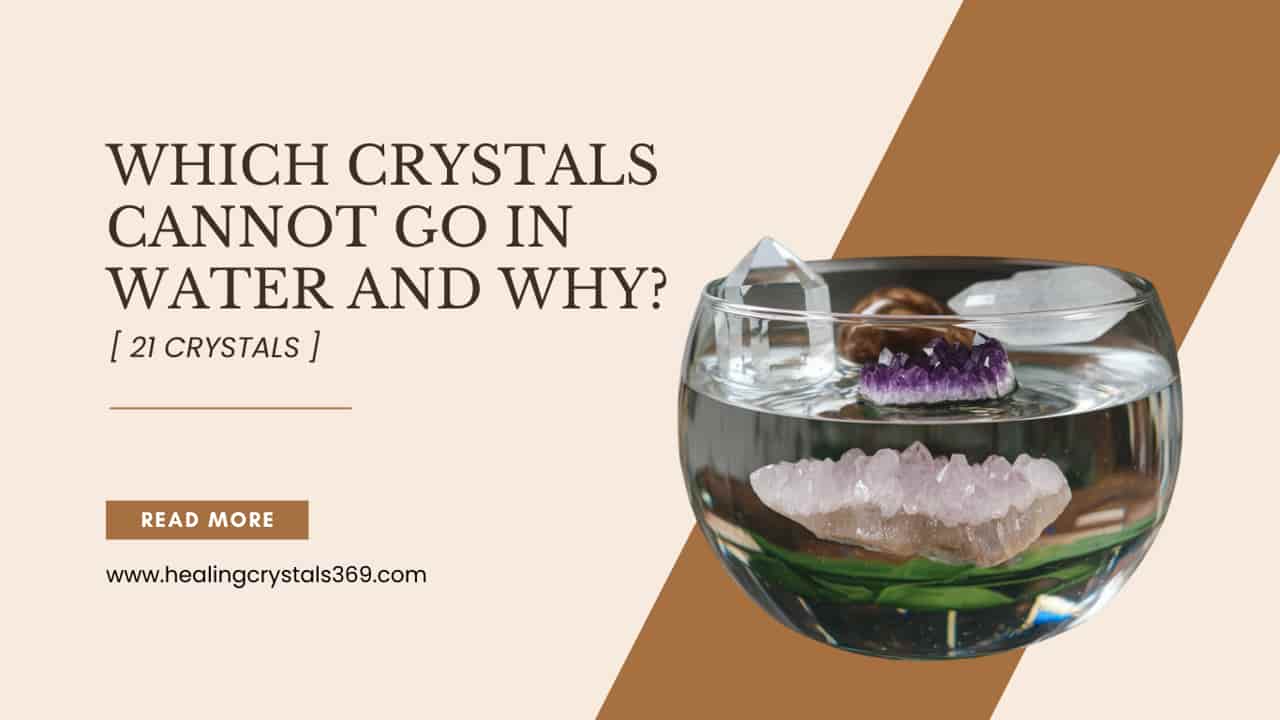
Are you wondering whether you can wash your favorite crystal bracelet with water, or if water might damage it? This comprehensive and beginner-friendly guide provides the answer. Whether you are cleaning new jewelry or starting a wellness routine, you will learn which stones can safely come into contact with water, which require extra caution, and which minerals must be kept completely dry to protect both your well-being and your collection.
Which Stones Should Stay Dry And Avoid Water?
No, not all crystal bracelets can be submerged in water. While durable quartz stones can be rinsed briefly, soft minerals (such as selenite and halite) may dissolve, metallic stones (like pyrite) can rust, and toxic minerals (such as malachite) should never come into contact with drinking water. Always check if a crystal is water-safe before cleaning it, and when in doubt, opt for safe, dry methods like moonlight or sound cleansing.
21 Crystals That Should Not Be Soaked in Water
| No. | Crystal | Water guidance | Main reason |
|---|---|---|---|
| 1 | Selenite | Keep dry | Soft gypsum mineral; water can damage its surface |
| 2 | Halite | Keep dry | Highly soluble; dissolves in water |
| 3 | Aragonite | Keep dry | Relatively soft and can be affected by prolonged water exposure |
| 4 | Angelite | Keep dry | Soft, delicate mineral; prolonged moisture may damage the surface |
| 5 | Apatite | Brief contact only | Relatively soft and can scratch or degrade with prolonged exposure |
| 6 | Azurite | Avoid prolonged soaking | Soft copper mineral; water can affect the surface and finish |
| 7 | Apophyllite | Keep dry | Soft and fragile with cleavage; prolonged water exposure is best avoided |
| 8 | Fluorite | Brief contact only | Relatively soft and cleavage-prone; avoid prolonged soaking |
| 9 | Celestite | Keep dry | Soft and fragile; prolonged water exposure can damage the surface |
| 10 | Celestobarite | Keep dry | Delicate mineral; prolonged water exposure is best avoided |
| 11 | Cerussite | Keep dry | Soft, fragile lead mineral; avoid water exposure, especially ingestion |
| 12 | Chalcopyrite | Avoid prolonged soaking | Can tarnish or oxidize; surface may change with moisture |
| 13 | Chrysocolla | Keep dry | Soft and often porous; prolonged water exposure can damage it |
| 14 | Chrysoprase | Brief contact only | Generally water-tolerant, but prolonged soaking and chemicals are best avoided |
| 15 | Cinnabar | Never use in drinking water | Contains mercury; unsuitable for water intended for ingestion |
| 16 | Colemanite | Keep dry | Relatively soft and water-sensitive; prolonged exposure is best avoided |
| 17 | Moldavite | Brief contact with caution | Can have delicate/fractured edges; avoid prolonged soaking and temperature shock |
| 18 | Malachite | Avoid soaking | Copper mineral; avoid using it in drinking water or crystal elixirs |
| 19 | Lepidolite | Keep dry | Soft mica mineral with delicate layers; prolonged water exposure can damage it |
| 20 | Labradorite | Brief contact with caution | Generally tolerates brief rinsing, but prolonged soaking is unnecessary |
| 21 | Larimar | Brief contact with caution | Relatively soft; prolonged soaking and chemicals can affect its surface |
Table of Contents
Which Crystals Cannot Go in Water?
Crystals That Should Not Be Soaked
According to traditional crystal care practices and mineral properties, certain delicate stones should never be soaked in water. This is because their soft texture, solubility, or fragile layers make them highly susceptible to permanent damage caused by water.
1. Selenite
- Can it be soaked? No, absolutely not.
- Mineral Composition: A fibrous variety of hydrous calcium sulfate (gypsum) with a very low Mohs hardness rating (2).
- Sensitivity to Moisture: Its structure resembles crystallized minerals that react poorly to contact with liquids; water easily dissolves its outer layers.
- Effect on Surface: Running water or soaking causes it to lose its smooth polish and natural luster, leaving the stone rough or chalky.
- Best Alternative: Use moonlight, sound bowls, or a soft, completely dry cloth to cleanse and recharge Selenite.

2. Halite
- Can it be soaked? No, absolutely not.
- Mineral Composition: Pure natural sodium chloride (rock salt), held together by ionic bonds.
- Sensitivity to Moisture: Dissolves easily in aqueous environments; water molecules rapidly break down its crystal lattice structure.
- Effect on Surface: Even brief soaking causes the stone to shrink rapidly, losing its sharp geometric edges, and eventually dissolving into brine (saltwater).
- Best Alternative: Keep Halite completely away from water and liquids; use a bed of dry salt or sound waves for cleansing.
3. Lepidolite
- Can it be soaked? No, absolutely not.
- Mineral Composition: Lithium-bearing potassium aluminium silicate, belonging to the sheet-silicate mica family.
- Sensitivity to moisture: It exhibits ‘basal cleavage’ (the ability to separate into layers), meaning it is composed of millions of microscopic, ultra-thin layers.
- Effect on the surface: Water seeps between these delicate layers, breaking weak internal bonds and causing the stone’s layers to flake, warp, or crumble.
- Best approach: Avoid moisture entirely; refresh Lepidolite using dry cleansing methods such as sage smoke or intention setting.

Want detailed information about Lepidolite and Water. Read our complete guide to Is It Safe to Put Lepidolite in Water? A Detailed Guide.
4. Angelite
- Can it be soaked? No, absolutely not.
- Mineral composition: Anhydrous calcium sulfate (anhydrite), featuring a delicate, velvety texture and a Mohs hardness of approximately 3 to 3.5.
- Sensitivity to moisture: It has a chemical tendency to absorb water molecules and revert to ordinary gypsum.
- Effect on the surface: Prolonged exposure to moisture alters its physical structure; its delicate blue surface softens, and its matte finish becomes permanently damaged.
- Best approach: Keep Angelite in a dry place and cleanse it using moonlight or visualization techniques.
5. Celestite
- Can it be soaked? No, absolutely not.
- Mineral composition: Clusters of pale blue crystals made of strontium sulfate, with a Mohs hardness between 3 and 3.5.
- Effect of moisture: It has a soft texture and contains internal cleavage planes where moisture easily gets trapped.
- Effect on the surface: Water penetrates its fine fissures, potentially damaging the surface, dulling the crystal’s luster, and increasing the risk of breakage.
- Best approach: Clean it with a soft, dry brush and use sound or moonlight to refresh its energy.
6. Aragonite
- Can it be soaked? No, absolutely not.
- Mineral Structure: A carbonate mineral with a delicate, radiating cluster-like structure and natural porosity.
- Effect of Moisture: It is significantly softer and chemically less stable than other carbonate minerals, making it prone to breaking over time.
- Effect on Surface: Prolonged exposure to water can damage its fine, needle-like structure and compromise its structural integrity.
- Best Method: Keep Aragonite dry and use dry cleaning methods, such as placing it near other crystal clusters or using sound vibrations.
7. Apophyllite
- Can it be soaked? No, absolutely not.
- Mineral Structure: A hydrous potassium calcium silicate mineral containing essential water molecules.
- Effect of Moisture: It possesses a perfect cleavage plane, making it highly sensitive to temperature fluctuations and moisture.
- Effect on Surface: Soaking it in water risks causing the crystal to fracture along its internal cleavage planes and can dull its brilliant, glass-like luster.
- Best Method: Instead of washing Apophyllite with water, clean it gently using a dry microfiber cloth or ambient sound.
To keep these delicate minerals safe and lustrous, avoid using water entirely and opt for safe, dry cleaning methods—such as moonlight, smoke, sound bowls, or a clean cloth!
Crystals That Need Extra Care Around Water
Based on traditional crystal care and mineral properties, it is not advisable to soak these crystals in water—whether for short or long periods—due to the risk of surface damage, tarnishing, or structural deterioration. However, depending on their specific mineral composition, many of these crystals can withstand a quick rinse or brief contact, provided they are dried immediately.
8. Pyrite
- Can it be soaked? No; avoid prolonged soaking.
- Mineral Composition: An iron sulfide mineral (often called “Fool’s Gold”) with a metallic luster and a Mohs hardness of 6 to 6.5.
- Sensitivity to Moisture: It contains reactive iron atoms that react with atmospheric moisture and oxygen.
- Effect on Surface: Prolonged exposure to water causes pyrite to oxidize, tarnish, and rust; it may develop an unpleasant sulfur odor or cloudy, discolored surface spots.
- Best Option: Clean pyrite using dry methods, such as a soft dry cloth, sound (ambient vibration), or dry clear quartz clusters.
Want detailed information about Pyrite and Water? Read our complete guide to Can Pyrite Crystal Go in Water?
9. Fluorite
- Can it be soaked? No; limit contact to a brief moment or a quick dip.
- Mineral Composition: A halide mineral composed of calcium fluoride, with a Mohs hardness of 4 and perfect octahedral cleavage.
- Sensitivity to Moisture: It is relatively soft and prone to structural damage or scratching upon prolonged exposure to liquids.
- Effect on Surface: While a quick rinse is sometimes permissible, soaking fluorite allows water to seep into microscopic fissures, potentially compromising its glossy, polished surface and clarity.
- Best option: Minimize water contact as much as possible; cleanse under moonlight or wipe with a soft cloth.

10. Malachite
- Can it be soaked? No, avoid soaking.
- Mineral composition: A basic copper carbonate mineral featuring distinctive green banding; it has a Mohs hardness of 3.5 to 4.
- Sensitivity to moisture: As a copper-based mineral, water can dull its luster and affect its surface texture. Furthermore, it is completely unsuitable for making crystal elixirs (infusing water for drinking).
- Effect on surface: Soaking malachite can cause copper compounds to leach out and may degrade its intricate, velvety green surface patterns over time.
- Best option: Gently wipe with a soft, dry cloth and use smoke or sound for an energizing cleanse.
11. Moldavite
- Can it be soaked? No; limit contact to brief periods and handle with care.
- Mineral composition: A natural tektite (glass formed by meteorite impact) with a unique, textured, and pitted surface; it rates approximately 5.5 on the hardness scale.
- Effect of moisture: Due to its violent formation process, it possesses delicate, sharp, and fractured micro-edges where moisture can become trapped.
- Effect on surface: While glass generally withstands water, prolonged submersion or sudden temperature changes can stress its delicate, irregular edges and fine fissures.
- Best method: Rinse briefly only when necessary and dry immediately with a microfiber cloth, or cleanse using moonlight.
12. Labradorite
- Can it be submerged in water? No; limit contact to brief periods and handle with care.
- Mineral Composition: A feldspar mineral renowned for its iridescent colors (labradorescence) and a Mohs hardness of 6 to 6.5.
- Effect of Moisture: Brief washing generally causes no issues; however, prolonged immersion in water is unnecessary and potentially risky, as fine cracks may exist within its crystal layers.
- Effect on Surface: Prolonged exposure to water and trapped moisture can dull the magnificent blue, gold, and green shimmer found beneath its surface.
- Best Method: Occasionally wipe quickly with a damp cloth and dry thoroughly immediately after, or use moonlight for cleansing.
13. Hematite
- Can it be submerged in water? No; it should only come into contact with water briefly and with caution.
- Mineral Composition: An iron oxide mineral featuring a metallic gray-to-black luster and a Mohs hardness of 5.5 to 6.5.
- Effect of Moisture: Due to its high iron content, remaining wet can lead to surface rusting and damage to the coating.
- Effect on Surface: Prolonged immersion or failure to dry completely can cause oxidation on surface blemishes, marring its smooth, metallic luster.
- Best Method: Clean by wiping with a dry cloth and store in a completely moisture-free environment.
14. Green Aventurine
- Can it be soaked in water? It is generally durable, but caution is advised.
- Mineral Composition: It is a type of quartz containing tiny mineral inclusions (such as mica or fuchsite) that give it a shimmering green appearance. It has a Mohs hardness of 7.
- Effect of Moisture: As a type of macrocrystalline quartz, it is physically much harder and more water-resistant than softer minerals.
- Effect on Surface: A quick wash or cleaning is generally safe; however, soaking a polished gemstone bracelet in water for an extended period can weaken the elastic cord or affect bonded areas.
- Best Practice: Clean quickly when necessary, but keep strung jewelry dry to maintain the integrity of the cord.
Although these stones are harder than delicate minerals like gypsum or salt, taking precautions—such as avoiding prolonged soaking and opting for dry cleaning or quick, gentle washing—will ensure your collection remains lustrous for years to come!
Crystals You Should Never Use in Crystal-Infused Drinking Water
Based on their mineral safety and physical properties, these stones contain toxic elements that can dissolve into liquids, making them completely unsafe for human consumption.
15. Malachite
- Can it be used in drinking water? No, absolutely not.
- Mineral Composition: It is a basic copper carbonate mineral with high copper content and a Mohs hardness of 3.5 to 4.
- Sensitivity to Liquid: Copper compounds are water-soluble to varying degrees; water breaks down the stone’s surface, causing toxic copper ions to dissolve directly into the liquid.
- Health Risks: Drinking water infused with Malachite can lead to severe heavy metal poisoning, gastric irritation, and nausea.
- Best Option: Keep Malachite completely dry; use it externally for your crystal practice or as room décor.
16. Cinnabar
- Can it be used in drinking water? No, absolutely not.
- Mineral Composition: It is a toxic mercury sulfide mineral, typically bright red or brownish-red in color.
- Sensitivity to Liquid: Cinnabar is highly unstable and hazardous; even slight exposure to moisture can release dangerous mercury particles.
- Health Risks: Mercury is a potent neurotoxin. Consuming water exposed to Cinnabar can cause severe damage to the nervous system, kidneys, and overall health.
- Best Option: Use Cinnabar solely for decorative purposes; keep it behind glass or in a secure, sealed container to prevent any contact with liquids or skin.
17. Azurite
- Can it be used in drinking water? No, absolutely not.
- Mineral Composition: It is a soft, deep-blue copper carbonate hydroxide mineral with a Mohs hardness of 3.5 to 4.
- Sensitivity to Liquids: Like malachite, azurite is copper-based and can chemically break down when submerged in liquid.
- Health Risks: Soaking azurite in water causes toxic copper elements to leach into the drink, posing a risk of severe internal toxicity if consumed.
- Best Practice: Use azurite only for display or meditation; cleanse it using dry methods such as smoke or sound bowls.
18. Cerussite
- Can it be used in drinking water? No, absolutely not.
- Mineral Composition: It is a lead carbonate mineral with a high lead content; it is fragile and prone to breaking.
- Effect of Liquids: Lead-bearing minerals react easily with moisture, potentially releasing microscopic particles or leaching toxic lead into the water.
- Health Risks: Lead poisoning is a serious and irreversible condition that affects almost every organ system in the human body, particularly the brain and nervous system.
- Best Practice: Handle cerussite with great care, keep it completely away from water and food preparation areas, and wash your hands thoroughly after touching it.
Other Minerals Containing Harmful Elements
- Can they be used in drinking water? No; never assume that a crystal is safe for making an ‘elixir’ (crystal-infused water).
- Mineral composition: Any mineral containing heavy metals, radioactive elements, or toxic compounds (such as arsenic, lead, copper, mercury, or barium).
- Effect of liquids: Liquids act as solvents, accelerating the release of toxic ions, microscopic mineral dust, and soluble chemical compounds from the stone.
- Health risks: Directly consuming water contaminated with heavy metals or toxic minerals can lead to severe poisoning or long-term health damage.
- Best option: If you wish to use crystal-infused water, always employ the “indirect method”—placing safe crystals around a sealed glass container of water rather than putting them directly into the liquid.
When experimenting with crystal usage, do not risk your health by drinking water directly infused with crystals unless the stone is chemically inert, non-toxic, and considered safe. To enjoy your crystals safely, use them externally or stick to dry methods!
What Crystals Can Go in Water?
Only hard, chemically stable, and non-porous stones (especially those in the quartz family) remain safe after brief contact with water. Soft, water-soluble, or toxic minerals must be kept completely dry.
Water-safe stones – At a glance
Safe for water (quick rinses only):
- Examples: Clear Quartz, Amethyst, Rose Quartz, Citrine, Smoky Quartz, Green Aventurine.
- Why: They rank high on the Mohs hardness scale (around 7) and have a stable, non-porous structure. Always dry them immediately after a quick rinse.
Keep dry (never submerge in water):
- Examples: Selenite, Halite, Lepidolite, Angelite, Celestite, Aragonite.
- Why: They are very soft, water-soluble, or porous; water can dissolve, deform, or damage their surfaces.
Toxic / Unsafe for water:
- Examples: Malachite, Cinnabar, Azurite, Cerussite.
- Why: They contain heavy metals or toxic elements that can dissolve in water and harm your health.
When in doubt, avoid using water entirely and opt for safe, dry cleansing methods such as moonlight, sound bowls, or a microfiber cloth!
Want detailed information about Crystals That Can Go in Water. Read our complete guide to What Crystals Can Go in Water?
What to Do If You Accidentally Get a Crystal Wet
If a water-sensitive or delicate crystal accidentally comes into contact with moisture, do not panic. You can prevent permanent damage by immediately removing, drying, and inspecting the stone, and by adopting proper care methods for your collection moving forward.
Step-by-Step Recovery Guide
- Remove it from the water immediately.
- Why: The longer a water-sensitive or water-soluble mineral remains in liquid, the deeper the moisture penetrates. Removing the crystal immediately halts the damage process—especially for soft minerals like gypsum, salt-based stones, or porous structures.
- Wash only if appropriate.
- Why: If the crystal belongs to a durable, water-insoluble family (such as a variety of quartz) and the water was dirty or soapy, a quick rinse with clean water can remove residual grime. However, if it is a soft mineral like selenite or halite, avoid washing it to prevent further dissolution of the surface.
- Dry it gently.
- Why: Use a clean, soft microfiber cloth or a lint-free towel to dry the stone completely. Avoid vigorous rubbing, as this can scratch the surface of soft minerals or cause delicate layers (such as mica) to flake off.
- Avoid heat and sudden temperature changes.
- Why: Never use a hair dryer, direct heat from an oven, or intense sunlight to speed up the drying process. Rapid temperature changes or thermal shock can cause internal cracking, particularly in stones with cleavage planes or trapped internal moisture.
- Inspect for cracks, flaking, or surface damage.
- Why: Examine the stone closely in good light. Look for a chalky texture, faded spots, flaking layers, or newly formed fine cracks. Detecting damage early helps you decide whether the stone requires more careful handling in the future.
- Switch to dry cleaning methods next time.
- Why: To prevent such issues in the future, stop cleaning the stone with water altogether. Adopt completely safe, dry methods—such as moonlight, sound bowls (singing bowls), sage smoke, or placing the crystal on a bed of dry quartz clusters.
Mistakes happen! By acting quickly to remove, dry, and inspect your crystal, you can minimize damage and keep your gemstone safe and beautiful.
Safe Alternatives to Water Cleansing
When using water poses a risk to delicate, water-soluble, or toxic crystals, opt for these completely dry and 100% safe methods instead:
- Moonlight Cleansing: Place your crystals on a windowsill on a full moon night. This method is safe for every stone and requires no physical contact.
- Sound Cleansing: Use a singing bowl, chimes, or a tuning fork. Sound waves cleanse the crystal’s energy without the need to touch or wet the stone.
- Smoke Cleansing: Hold the stones over the smoke of dried sage, palo santo, or incense for 30 to 60 seconds to clear away accumulated energy.
- Selenite or Quartz Beds: Place your bracelets on a dry selenite charging plate or a clear quartz cluster overnight to reset their energy.
- Breath & Intention: Hold the crystal in your hand, breathe mindfully, and visualize a bright light cleansing its energy. This is excellent for the most delicate stones.
Key Tip: To protect stones with delicate layers or heavy metal content—and to keep your crystal collection fresh and positively charged—avoid using water entirely!
Want detailed information about Cleanse and Charge Crystal Methods? Read our complete guide to How to Cleanse and Charge Crystal Bracelets: Safe & Simple Methods.
Risks of Putting Crystals in Water
Placing crystals in water is not always safe. Depending on the crystal’s composition, hardness, and the presence of metal components or adhesives, water can alter its appearance, compromise its structure, or pose health risks.
- Dissolving or Softening
- What happens: Some minerals are essentially composed of salt or very delicate compounds. When they come into contact with water, their outer layers break down.
- Why it matters: Stones like Selenite and Halite can literally melt, shrink, or turn into a chalky powder when wet. Even a quick rinse can permanently damage their smooth, polished surfaces.
- Cracking or Surface Damage
- What happens: Many crystals contain microscopic fissures or natural cleavage planes formed during their creation deep within the earth. Water can seep deep into these tiny crevices.
- Why it matters: If the stone absorbs water and is exposed to temperature fluctuations, trapped moisture can expand or weaken the internal structure, potentially causing the crystal to crack, flake, or shatter completely.
- Staining, Rusting, and Jewelry Damage
- What happens: Stones containing iron or reactive metals can react with the moisture and oxygen present in the air.
- Why it matters: Pyrite can rust, develop stains, and lose its brilliant, metallic golden luster. Additionally, if your crystals are made into bracelets, water can cause metal clasps to rust, dissolve the adhesive holding charms in place, or degrade elastic cords, leading to jewelry breakage.
- Health Risks and Leaching of Toxic Elements
- What happens: Some beautiful crystals contain heavy metals like copper (in malachite) or mercury (in cinnabar). These elements are chemically unstable when exposed to liquids.
- Why it matters: If you place these stones in water to create an elixir or a drinkable infusion, toxic chemicals will leach from the stone directly into the liquid. Drinking that water can lead to severe toxicity, nausea, or long-term health issues.
- The Safe Approach
- What happens: Since it can be difficult to determine the safety of a stone, the best rule for crystal care is to check first.
- Why it matters: Whenever you are unsure about a crystal’s composition, avoid using water entirely. To keep everything safe and sound, opt for dry cleansing methods—such as moonlight, sound bowls, sage smoke, or simply placing the stones in a clean, dry location.
How Water Can Damage Some Crystals
Placing crystals in water is not always safe. Depending on the stone’s composition, water can cause physical damage, ruin jewelry, or create health risks. Here is why you need to be cautious:
- Dissolving: Soft, water-soluble minerals like Selenite and Halite can gradually dissolve upon contact with water. Since these stones are composed of delicate minerals or natural salts, getting them wet can literally melt them or turn them into a chalky powder.
- Softening and surface damage: Water can weaken or roughen soft or porous crystals, especially if they are soaked for extended periods. Moisture can get trapped in tiny pores or weaken outer layers, ruining the smooth, polished finish of delicate stones.
- Cracking and breakage: Water entering existing cracks—combined with temperature fluctuations—can increase the risk of damage. If water seeps into tiny, invisible internal fissures and the temperature changes, the stone may crack, shatter, or delaminate (flake apart).
- Rust and loss of luster: Moisture can cause oxidation or dulling in minerals like Pyrite and in the metal components of crystal jewelry. Iron-bearing stones can rust and lose their brilliant metallic sheen, while repeated water exposure can damage metal clasps, dissolve adhesives, and cause elastic bracelet cords to rot.
- Damage to treatments and jewelry: Water can loosen adhesives, affect coatings, fade treatments, or weaken elastic cords. Many gemstone bracelets utilize dyed stones, protective coatings, or adhesives to hold the pieces together; water can quickly wash away these treatments or compromise the stringing material.
- Mineral safety concerns: Certain minerals should never be used to prepare crystal-infused drinking water, even if brief external contact does not cause immediate damage. Note: This pertains to safety for consumption rather than physical damage to the stone—not every crystal becomes toxic upon contact with water, but some contain harmful heavy metals. For instance, stones like malachite contain copper and should never be used to make drinking water, as toxic substances can leach into the liquid and make you ill.
Always verify whether a crystal is water-safe before exposing it to any liquid. When in doubt, avoid using water entirely and opt for safe, dry cleansing methods—such as moonlight, sound, or simply placing your stones on a dry surface.
FAQs About Understanding Which Crystals Cannot Go in Water?
Can Hematite Get Wet?
Hematite can generally tolerate brief contact with water, but prolonged soaking is not recommended. Dry it after cleaning and avoid soaking hematite jewellery.
Can Green Aventurine Go in Water?
Green Aventurine is generally suitable for brief contact with clean water. Avoid prolonged soaking, hot water and harsh chemicals.
Can Moldavite Get Wet?
Moldavite is generally not water-soluble, but its natural fractures and delicate edges mean prolonged soaking is best avoided. Dry cleansing is a safer routine option.
Can Fluorite Go in Water?
Fluorite can tolerate brief contact with water, but it is relatively soft and cleavage-prone. Avoid prolonged soaking and sudden temperature changes.
Can Malachite Go in Water?
Avoid soaking malachite. Do not use it in crystal-infused drinking water because it contains copper-bearing minerals and is not suitable for ingestion-related use.
Can Labradorite Get Wet?
Labradorite can generally tolerate brief contact with water, but avoid prolonged soaking, hot water and sudden temperature changes.
Can Selenite Go in Water?
No. Selenite is soft and water-sensitive, so it should be kept dry.
Can Pyrite Go in Water?
Avoid prolonged soaking. Pyrite may tarnish or oxidize when exposed to moisture, especially when the specimen has cracks or impurities.

Aman Bhola – Crystal Healing Enthusiast & Writer at Healing Crystals 369
Aman Bhola is passionate about the art and science of crystal healing. Through Healing Crystals 369, he shares trusted insights, practical tips, and real-life experiences to help readers choose the right gemstones for emotional balance, positive energy, and spiritual growth. His work blends traditional wisdom with modern approaches, making crystal healing easy to understand and apply in daily life.
Conclusion: Which Crystals Cannot Go in Water?
Think of your crystals like your special friends. Just like you love a refreshing bath, some crystals love a dip in water! But not all crystals are water-friendly. Let’s find out which crystals should stay dry to stay healthy and vibrant.
Why some crystals are afraid of water?
- Dissolving crystals: Some crystals are like sugar cubes. They can dissolve in water, just like sugar dissolves in your tea.
- Rusting crystals: Iron crystals can rust when they get wet, just like a metal bike after rain.
- Harmful substances: Some crystals can release harmful substances when they get wet.